WhatsApp
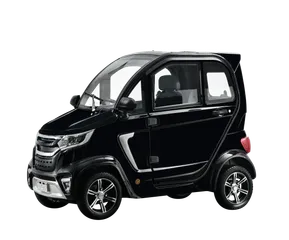
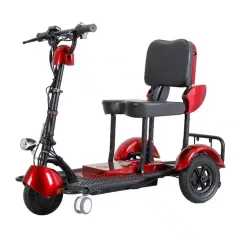
The machine fits you, not the other way round.
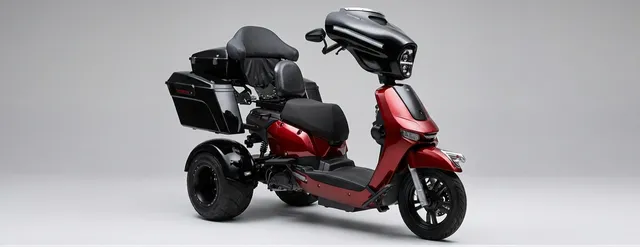
Why adaptations make the difference
Operate it without strength
When a hand or a wrist will not do what it used to, the controls decide whether you ride or not.
When a hand or a wrist will not do what it used to, the controls decide whether you ride or not.
Sit without pain
Seat height, tilt, armrests and backrest decide how long you can stay out.
Seat height, tilt, armrests and backrest decide how long you can stay out.
Fitted to your route
Door widths, kerbs, the ramp at home: some of it is solved on the machine rather than on the house.
Door widths, kerbs, the ramp at home: some of it is solved on the machine rather than on the house.
What gets adapted most
Not everything is possible on every model. Tell us your model and we will tell you what is.
Seat and swivel seat
A different seat, a wider seat base, a swivel seat for getting on and off, different armrests.
A different seat, a wider seat base, a swivel seat for getting on and off, different armrests.
Controls
A thumb throttle, the lever on the left instead of the right, larger switches, different grips.
A thumb throttle, the lever on the left instead of the right, larger switches, different grips.
Delta tiller
A loop handlebar instead of the classic tiller, where the wrists are the problem.
A loop handlebar instead of the classic tiller, where the wrists are the problem.
Leg and foot rests
Height-adjustable rests, heel straps, wider footplates.
Height-adjustable rests, heel straps, wider footplates.
Weather protection
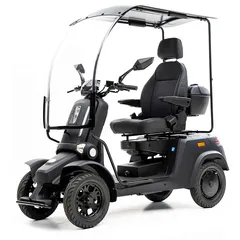
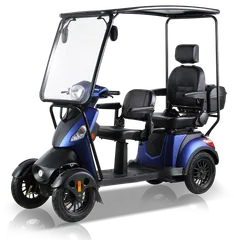
A canopy, a windscreen, a lap rug — depending on the model. Note: a canopy changes the width and the unladen weight, and both are class 3 limits.
A canopy, a windscreen, a lap rug — depending on the model. Note: a canopy changes the width and the unladen weight, and both are class 3 limits.
A bigger battery pack
More range, where the model allows it. We tell you what that realistically adds.
More range, where the model allows it. We tell you what that realistically adds.
What an adaptation can mean in UK law
In Britain your class hangs on measurable things: the number of seats, the width, the unladen weight and the speed the machine is incapable of exceeding. An adaptation can change those figures — and with them the rules that apply to you.
- A second seat takes the machine out of the invalid carriage classes altogether. Section 20(2) of the Chronically Sick and Disabled Persons Act 1970 defines an invalid carriage as built for the carriage of one person, and that is a construction test, not a speed test.
- Width beyond 0.85 m — a canopy, wider armrests, a body — takes it out of class 3.
- Unladen weight beyond 150 kg does the same. The allowance rises to 200 kg only where the extra is equipment necessary for the user's condition.
- Anything touching the speed limiter or the speed indicator goes to the heart of class 3: the regulations require a user-operable device limiting the machine to 4 mph and an indicator showing whether it is operating, and say the machine must not be used at any time unless that indicator is working.
- Changes after registration should be documented. Ask us about the paperwork before you have anything altered.
We tell you before every adaptation whether it touches the class. What applies to which class is set out on the page mobility scooter rules.
Sources: Use of Invalid Carriages on Highways Regulations 1988 · CSDPA 1970 s.20 · GOV.UK, the classes · checked 13 September 2026.
Measure it out with us before you order.
Common questions about adaptations
What people ask about it.
We use your details only to deal with your request.
Free and without obligation
No machine yet?
Then have the adaptation priced at the same time: ask for a quote and the adaptation you want is in the full price.