WhatsApp

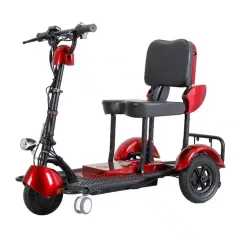
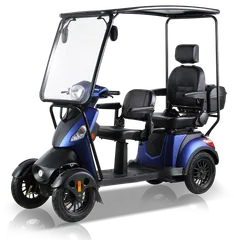
Class 2, class 3, and everything above 8 mph.
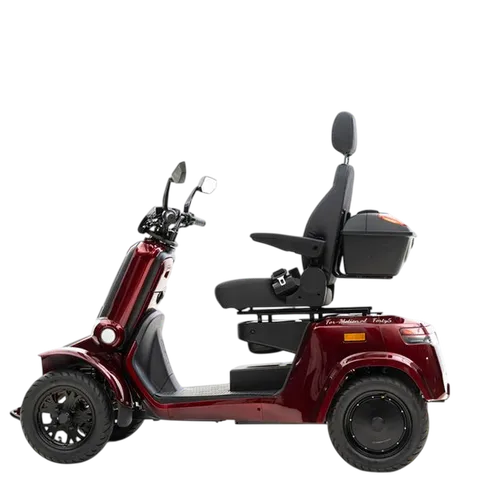
The three sentences that matter
8 mph is the ceiling
A class 3 invalid carriage must be "incapable of exceeding a speed of 8 miles per hour on the level under its own power". Above that the machine is not a mobility scooter in law at all, whatever the seller calls it.
A class 3 invalid carriage must be "incapable of exceeding a speed of 8 miles per hour on the level under its own power". Above that the machine is not a mobility scooter in law at all, whatever the seller calls it.
Class 3 must be registered
Registration with the DVLA is compulsory for a class 3 machine, on form V55/MV or V62. There is no vehicle tax to pay on a vehicle registered as a mobility scooter. A class 2 machine needs no registration.
Registration with the DVLA is compulsory for a class 3 machine, on form V55/MV or V62. There is no vehicle tax to pay on a vehicle registered as a mobility scooter. A class 2 machine needs no registration.
One seat, 0.85 m, 150 kg
A class 3 machine seats one person, is no wider than 0.85 m and weighs no more than 150 kg unladen. Break any one of those and it leaves the class — a second seat takes it out on the face of the statute.
A class 3 machine seats one person, is no wider than 0.85 m and weighs no more than 150 kg unladen. Break any one of those and it leaves the class — a second seat takes it out on the face of the statute.
Where For Motion stands
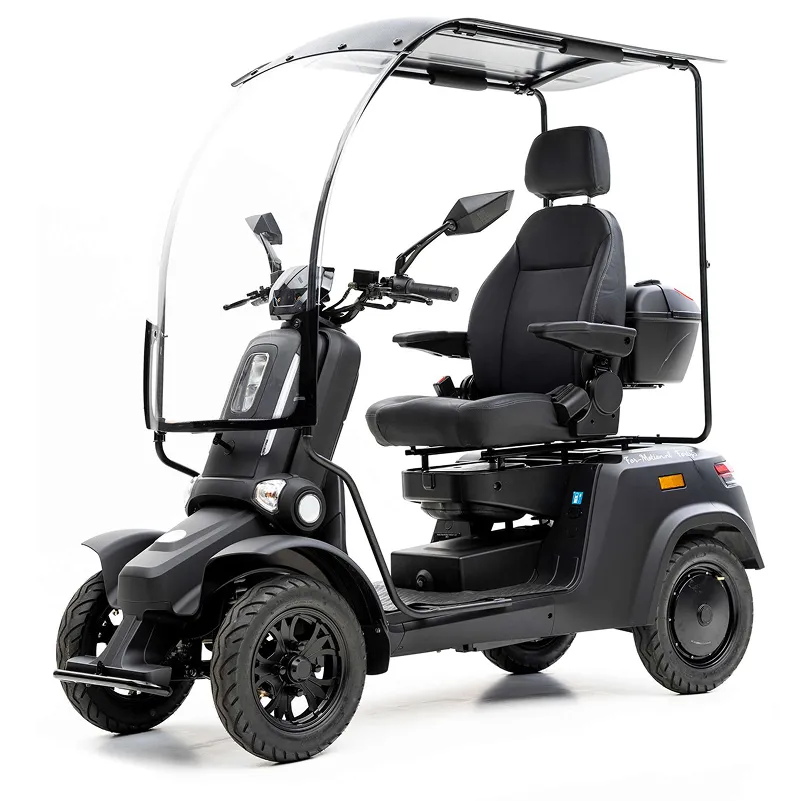
Every For Motion model can be supplied limited to 8 mph, which is the ceiling UK law puts on a mobility scooter. Where your chosen model can also meet the other class 3 limits — one seat, no wider than 0.85 m, no heavier than 150 kg unladen, with the 4 mph footway limiter and the speed indicator the regulations require — it can be registered with the DVLA as a class 3 machine, and we confirm that in writing for your model before you buy. A faster version of the same machine exists, and in Britain it is for private land only: a golf course, an estate, a private site. We never call a machine road legal above 8 mph, because in this country it is not one.
Sources: Use of Invalid Carriages on Highways Regulations 1988 · CSDPA 1970 s.20 · GOV.UK, the classes · checked 13 September 2026.
The three cases at a glance
| Class | Driving licence | DVLA registration | Insurance | Helmet | Minimum age | Where you may ride |
|---|---|---|---|---|---|---|
| Class 2 — incapable of exceeding 4 mph | None | None | Not required by law, strongly recommended | None | None | Pavements, pedestrian areas and physically separated cycle tracks. On the road only to cross, or where there is no pavement. Never motorways, bus lanes or painted cycle lanes. |
| Class 3 — incapable of exceeding 8 mph; one seat, ≤ 150 kg unladen, ≤ 0.85 m wide | None | Compulsory — register with DVLA (form V55/MV, or V62 if the log book is missing). No vehicle tax to pay. | Not required by law, strongly recommended | None | 14 | The road, plus pavements at 4 mph with the limiter engaged and the speed indicator working. Never motorways. On a dual carriageway with a limit above 50 mph a flashing amber beacon must be used. |
| Above 8 mph, or wider than 0.85 m, or over 150 kg — not in a class | Compulsory — the category the vehicle is approved in | Compulsory | Compulsory once the total weight exceeds 254 kg, and wherever the machine is not used solely by the one disabled person it was built for — which includes any two-seater | Depends on the approval category the vehicle is registered in; it is no longer a mobility scooter question | The minimum age of that licence category | The carriageway only. No pavements, no pedestrian areas, no cycle tracks, no cycle lanes. |
Class 1 is the fourth case and is not a For Motion category: it is a manual wheelchair, not mechanically propelled, with no licence, registration, insurance or minimum age.
Which class a given machine can be supplied and registered in goes in every quote we write, before you buy.
Sources: Use of Invalid Carriages on Highways Regulations 1988 · CSDPA 1970 s.20 · Road Traffic Act 1988 s.143 · Road Traffic Act 1988 s.185 · GOV.UK, the classes · GOV.UK, driving on the road · GOV.UK, tax, registration and insurance · The Highway Code, rules 36 to 46 · checked 13 September 2026.
Class 2: 4 mph, and the pavement is yours
A class 2 invalid carriage is "so constructed or adapted as to be incapable of exceeding a speed of 4 miles per hour on the level under its own power", with an unladen weight of no more than 113.4 kg. No driving licence, no DVLA registration, no compulsory insurance, no helmet and no minimum age.
You may use pavements, pedestrian areas and physically separated cycle tracks. You may use the road to cross it, or where there is no pavement — but never a motorway, a bus lane or a painted cycle lane. The braking system must hold the machine indefinitely on a 1-in-5 gradient without relying on a hydraulic or pneumatic device or on the flow of electric current, and lighting must meet the Road Vehicles Lighting Regulations when you are on the carriageway.
One point that matters for VAT: HMRC treats classes 1 and 2 as not intended or adapted for use on the road, which is why they qualify as goods described in VAT Notice 701/7 paragraph 2.4.
Class 3: 8 mph, the road, and a DVLA registration
A class 3 invalid carriage is capable of exceeding 4 mph but incapable of exceeding 8 mph on the level under its own power. It is the machine the British road market is built on. The requirements are not optional extras:
- DVLA registration is compulsory — form V55/MV for new and used machines, V62 where the log book is missing. There is no vehicle tax to pay on a vehicle registered with the DVLA as a mobility scooter or powered wheelchair.
- Minimum age 14. The regulations say the invalid carriage must not be used by a person aged under 14.
- Construction, all mandatory: unladen weight no more than 150 kg; overall width no more than 0.85 m; a device the user can operate that limits the speed to 4 mph plus an indicator showing whether that device is operating — and the machine must not be used at any time unless that indicator is working; an efficient braking system; lighting; a full view of the road ahead and safety glazing; a rear-view mirror; and a horn that is continuous and uniform and not strident, and is neither a reversing alarm nor a two-tone horn.
- On a pavement: 4 mph, limiter engaged. That is the whole point of the limiter and the indicator.
- No driving licence and no compulsory insurance. Section 20 of the Chronically Sick and Disabled Persons Act 1970 treats a complying invalid carriage as not being a motor vehicle for the Road Traffic Act 1988, and section 143(4) of that Act says this Part does not apply to invalid carriages. GOV.UK still recommends insurance, and so do we.
- Never on a motorway. On a dual carriageway with a speed limit above 50 mph a flashing amber beacon must be used; on other dual carriageways it is recommended. No bus lanes, no painted cycle lanes.
- The horn must not be sounded while you are stationary on a road, or on a restricted road between 23:30 and 07:00.
Above 8 mph: not a mobility scooter at all
GOV.UK is explicit. A vehicle is not in a class if it can go more than 8 mph, if it is wider than 0.85 m, or if it weighs more than 150 kg (200 kg with the equipment necessary for the user's condition). What follows is a different world:
- The road only. No pavements, no pedestrian areas, no cycle tracks, no cycle lanes.
- DVLA registration is compulsory, and so is a lawful approval route before registration.
- The rider must hold a driving licence of the category the vehicle is approved in.
- Insurance becomes compulsory once the total weight exceeds 254 kg — and on the face of section 185 of the Road Traffic Act 1988, wherever the machine is not "specially designed and constructed, and not merely adapted" for a disabled person and "used solely by such a person". A second seat fails that test.
- Do not assume free vehicle tax. The nil rate is tied to being registered as a mobility scooter.
This is why we never describe a fast machine as road legal in Britain. Our faster configurations are for private land, and even there the Road Traffic Act's insurance duty reaches any "road or other public place" — which catches supermarket and retail-park car parks.
A two-seater can never be a UK invalid carriage
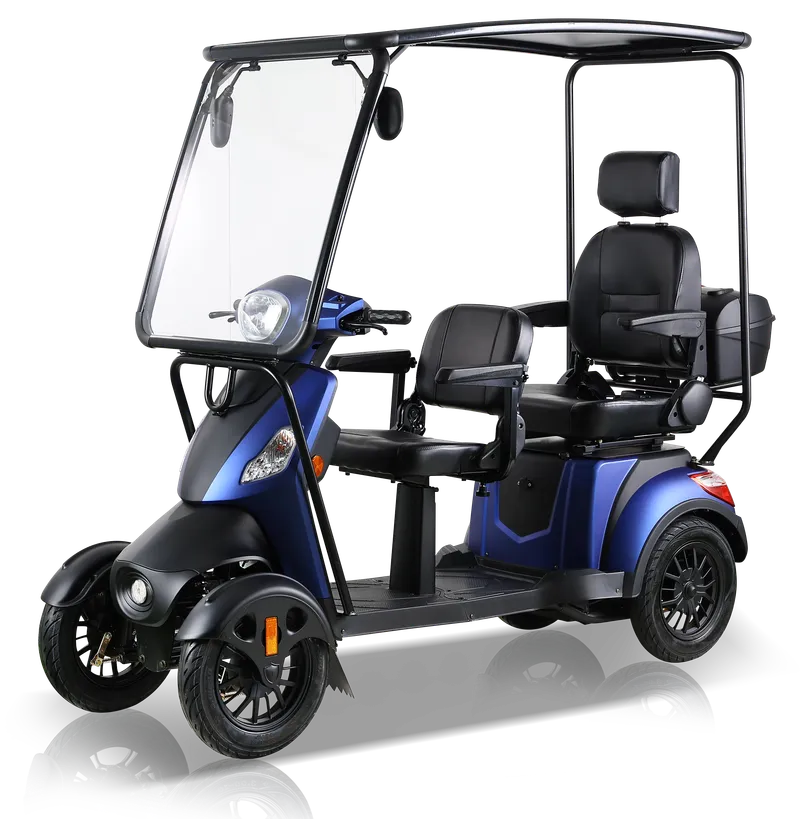
Section 20(2) of the Chronically Sick and Disabled Persons Act 1970 defines an invalid carriage as a vehicle constructed or adapted for use for the carriage of one person. That is a matter of construction, not of speed: a two-seat machine is outside the classes however slowly it goes. Our two-seaters are therefore sold in Britain with that stated plainly, and we tell you what road route, if any, exists for the model you are looking at.
Who may use one
Even a compliant class 2 or class 3 machine may be used only by the disabled person it was built for, by somebody moving it for repair or maintenance, by a manufacturer testing or demonstrating it, by a seller demonstrating it, or by a person giving practical training. There is no "elderly but not disabled" category. GOV.UK puts the penalty for misuse as the same as for driving a car: prison, a driving ban or an unlimited fine.
Motability: the funded route, and what it needs
The Motability Scheme lets you exchange a qualifying mobility allowance for a car, a wheelchair accessible vehicle, a scooter or a powered wheelchair, one lease at a time. The qualifying allowances are the enhanced rate of the mobility component of Personal Independence Payment, the higher rate mobility component of Disability Living Allowance, the enhanced rate mobility component of Adult Disability Payment, the higher rate mobility component of Child Disability Payment, Scottish Adult DLA higher rate mobility, the Armed Forces Independence Payment and the War Pensioners' Mobility Supplement — with at least 12 months of the award remaining. Lower rate components, Attendance Allowance, Carer's Allowance and Employment and Support Allowance do not qualify.
Motability is a dealer accreditation, and we hold none: For Motion cannot supply through the Motability Scheme today. We describe it here as consumer information, because for many British buyers it is the right route — and the Scheme's scooters are class 2 and class 3 machines.
VAT: zero rating is possible, but never automatic
VAT Notice 701/7 zero-rates qualifying goods supplied to a person who is "chronically sick or disabled" — a person with a physical or mental impairment which has a long-term and substantial adverse effect on their ability to carry out everyday activities. Being elderly without a chronic condition does not qualify. Three things must all be true: an eligible customer, a qualifying product, and a written customer eligibility declaration, signed on every zero-rated sale.
Classes 1 and 2 qualify, because HMRC treats them as not intended or adapted for road use. A class 3 machine does not qualify by default: HMRC says class 3 scooters are normally intended or adapted for use on the road and so do not qualify, but that a class 3 scooter designed solely for use by disabled persons can be zero-rated — a test that looks at the designer's original intention, evidenced by specifications, test results and patents.
And the 5 per cent reduced rate does not apply to scooters at all. It covers mobility aids installed in the home for people over 60 — grab rails, ramps, stair lifts, bath lifts, built-in shower seats and walk-in baths with sealable doors. Nothing else. So for a private buyer there are two outcomes only: zero rating with a signed declaration, or the standard rate. We say which applies to your machine in the quote, and we never show a zero-rated figure as if it were the price everybody pays.
Sources: Use of Invalid Carriages on Highways Regulations 1988 · CSDPA 1970 s.20 · Road Traffic Act 1988 s.143 · Road Traffic Act 1988 s.185 · GOV.UK, the classes · GOV.UK, driving on the road · GOV.UK, tax, registration and insurance · The Highway Code, rules 36 to 46 · GOV.UK, driving licence categories · GOV.UK, vehicle approval · VAT Notice 701/7 · Motability Scheme, how it works · Motability Scheme, qualifying allowances · checked 13 September 2026.
So which class is my model?
Every quote states the class, the paperwork and the duties for the model you want.
Common questions about the rules
With the regulation, so you can check it yourself.
We use your details only to answer your enquiry.
Free and without obligation
Rather talk it through?
Ring us on +31 85 212 97 54. Or ask for a quote — it states the class, the paperwork and the duties for your model before you buy.